Your transmission rarely fails without warning. Long before anything breaks, it usually gives you signs of low transmission fluid, like a slow shift into drive, a strange whine, or a few red drops on the driveway. Spot them early, and a simple top-off or seal repair can save you from a far bigger bill. We cover the seven most common warning signs, what makes the fluid run low in the first place, and what to do the moment you notice something is off.
7 Signs of Low Transmission Fluid You Shouldn’t Ignore
An automatic transmission uses fluid pressure to apply its clutches and change gears. When the level drops, that pressure drops with it, and the symptoms below start to appear. You may notice only one at first, but they tend to stack up the longer the problem goes unfixed.
Slipping Gears
Slipping is the most common symptom. The engine revs climb, but the car doesn’t speed up the way it should, almost as if it briefly popped into neutral. It’s most noticeable when accelerating hard or climbing a hill, because that’s when the transmission needs the most pressure to hold a gear.
Delay When Shifting Into Drive or Reverse
Normally, the car engages within a second of moving the shifter. With low fluid, the pump needs extra time to build pressure, so you get a pause, then a thump as the gear finally catches. This delay is often worst on cold mornings.
Rough or Erratic Shifts
Shifts that feel harsh, late, or random are another clue. Some drivers also feel a shudder at certain speeds, which is easy to confuse with shaking from tires or brakes. If the vibration only shows up during shifts, the transmission is the more likely source.
Whining, Humming, or Clunking Noises
A low level lets air into the system, and the pump starts to whine. Unlike a bad wheel bearing, which gets louder with road speed, transmission whine usually changes with engine speed and gear position.
A Burning Smell
Less fluid means less cooling, so the transmission runs hot. A sharp, burnt-toast smell after driving is a sign the remaining fluid is overheating, and the risk climbs during towing, stop-and-go traffic, or extreme heat.
Red Fluid Under the Car
Transmissions don’t burn fluid the way engines can burn oil, so a low level almost always means a leak. Look for red or reddish-brown spots under the middle or front of the car. Sweet-smelling green, orange, or pink drops are more likely coolant, which points to a different problem.
A Warning Light on the Dashboard
Many cars have a transmission temperature light, and others turn on the check engine light when the transmission computer detects slipping or overheating. A cheap OBD2 scanner can read the stored code and tell you whether the transmission is the source.
What Causes Transmission Fluid to Run Low?
Unlike engine oil, transmission fluid isn’t consumed during normal driving. It circulates in a closed system, so if the level is dropping, it’s escaping somewhere. These are the usual leak points:
- Pan gasket. The most common culprit. A leaking pan gasket can drip even while the car is parked and the engine is off.
- Cooler lines. These metal and rubber lines run to the radiator and can rust, crack, or loosen at the fittings.
- Axle and output shaft seals. Worn seals let fluid weep out where the drive axles or driveshaft leave the transmission.
- Front pump seal. A leak between the engine and transmission often points here, and it’s a bigger job because the transmission has to come out.
- Drain plug or filler tube. A loose plug or cracked tube O-ring after a recent service is an easy fix that’s often overlooked.
Age plays a big role too. Rubber seals harden and shrink over time, which is why leaks become more common on high-mileage cars.
What to Do If Your Transmission Fluid Is Low
The first step is confirming the level, then finding out why it dropped. Topping off without fixing the leak only buys you time, so treat it as a temporary step.
Check the Level the Right Way
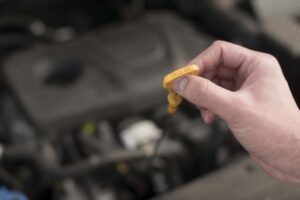
On most automatics, the check is done with the engine warm and running, the car in park, and the parking brake on. It works much like checking your engine oil: pull the dipstick, wipe it, reinsert it, and read the level. Many newer cars have no dipstick at all, and their transmissions are filled from underneath with a pump, so a shop needs to check those.
Top Off With the Correct Fluid
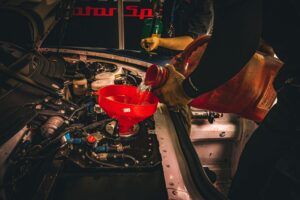
If the level is low, add only the fluid type listed in your owner’s manual, in small amounts, rechecking as you go. Overfilling is almost as harmful as running low, because the fluid can foam and lose pressure. For a slow pan gasket seep, RepairPal notes a few days of driving is usually fine as long as you check the level daily.
What Repairs Typically Cost
The fix depends on where the fluid is escaping. These RepairPal averages for a transmission pan gasket replacement show how much the price varies from one vehicle to the next:
| Vehicle | Pan gasket replacement |
|---|---|
| 2022 Ford Explorer | $307 to $370 |
| Kia K4 | $337 to $445 |
| 2024 GMC Yukon | $508 to $650 |
| 2017 Audi A4 | $742 to $1,055 |
Before paying for any transmission repair, enter your VIN on the NHTSA recall lookup, since some leaks and transmission faults are fixed for free under a recall. For anything past a gasket or cooler line, it’s worth taking the time to find a good mechanic who specializes in transmissions.
Catch It While the Fix Is Still Cheap
Low fluid is one of the few transmission problems that starts small and stays affordable if you act fast. A new gasket or cooler line costs a fraction of a rebuild, and a rebuild sits near the top of the list of the most expensive car repairs. If you notice slipping, delays, or red spots, check the level that same day.
Frequently Asked Questions About Low Transmission Fluid
Can You Drive With Low Transmission Fluid?
Only for a short distance, and only if the car still shifts normally. Driving with slipping or overheating adds wear to the clutches every mile, so top it off or have the car towed rather than pushing through.
How Long Does Transmission Fluid Last?
It depends on the vehicle and the fluid. Intervals vary widely between brands, so your owner’s manual is the best guide, and Honda owners can see where the service falls in the Honda maintenance schedule.
Does a Manual Transmission Show the Same Signs?
Not exactly. Manual gearboxes use gear oil instead of ATF, which is one of the key manual vs automatic differences. Low gear oil usually shows up as grinding, hard shifting, or a whine that changes with road speed.