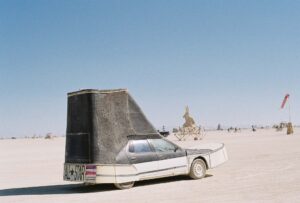
The world of strange cars is a wild ride through design experiments, engineering risks, and straight-up “what were they thinking?” moments. These quirky machines didn’t just break the mold–they rolled it up and launched it into space. Whether they were born from bold innovation or beautiful madness, they’ve earned their spot in automotive history’s weirdest garage. Let’s take a closer look at these models.
The Oddballs of Automotive History
Some vehicles were clearly built after a few too many cups of coffee–or maybe something stronger. These aren’t your average sedans or SUVs. Nope, with the evolution of these machines, the entire idea of them shifts, too. These are the four-wheelers that made people stop and say, “Wait… what is that?”
In the next text, we’ll explore some of the most fantastically crazy ideas ever put on the road from a ride with a real propeller on the front to one that felt six wheels were better than four, to a James Bond-worthy water cruiser on wheels.
The Propeller-Driven Wonder: Leyat Helica
Imagine cruising down the street in what looks like a DIY airplane that forgot its wings–that’s the Leyat Helica for you. Built-in the 1920s by French engineer Marcel Leyat, this strange contraption was powered by an actual wooden propeller mounted at the front, spinning like a blender on overdrive.
Instead of a steering wheel, it had a rudder-style setup, and the entire body was made from lightweight plywood. The Helica could hit speeds up to 106 mph (170 km/h), which is impressive, and mildly terrifying. Just remember there were no seatbelts back then and you’re basically in a spinning dart.
The Six-Wheeled Marvel: Covini C6W
Because four wheels are just so mainstream, the Covini C6W went full rebel with six. Inspired by the Tyrrell P34 Formula 1 four-wheeler from the ’70s, this Italian-made oddity sports two extra wheels up front, not for show, but to enhance grip, braking, and stability.
Under the hood, it packs a 4.2-litre Audi V8 engine and can sprint to 60 mph in under 4 seconds. So yeah, it’s not just for giggles. Only a handful were ever made, making it one of the rarest and coolest “what if?” moments in automotive design.
The Amphibious Adventure: Gibbs Aquada
Why drive to the lake when you can drive into the lake? The Gibbs Aquada is the James Bond fever dream made real–a fully amphibious ride that can transform into a watercraft in just five seconds.
Thanks to retractable wheels and a jet propulsion system, the Aquada can hit around 100 mph (160 km/h) on land and cruise at 30 mph (48 km/h) in water. Richard Branson even used one to break the record for the fastest crossing of the English Channel by an amphibious vehicle. Move over, Q–this ride brings the gadgets all by itself.

Concept Rides That Defied Convention
Some cars are built to be driven. Others are built to make you say, “Wait, is that thing even street-legal?” Welcome to the wonderfully weird world of concept cars–where automakers let their imagination run wild and forget about things like “practicality” or “mass production.” These vehicles broke every design rule in the book, and we’re so glad they did.
The Futuristic Fantasy: BMW GINA
The BMW GINA looked less like a car and more like a shape-shifting alien lifeform sent to study Earth’s roads. Instead of metal panels, this concept had a flexible fabric skin stretched over a wire frame, meaning the ride could literally change shape. Yes, the headlights would “open” like eyelids.
Designed in the early 2000s, it was BMW’s bold experiment in adaptive design, and while it never hit the production line, it definitely made waves in the design world. Honestly, it was less “German engineering” and more “sci-fi fever dream,” and that’s why we love it.
The Box on Wheels: Nissan Cube
Who knew a rolling refrigerator could become a cult classic? The Nissan Cube embraced its inner rectangle with a look that was unapologetically, well, cubed. But it wasn’t just the boxy shape that raised eyebrows.
It also had an asymmetrical rear window, giving it a quirky, offbeat charm that people either totally loved or completely didn’t get. Designed with urban functionality in mind, it became a hit in Japan and developed a niche fan base elsewhere, proving that sometimes weird works–even when your car looks like modern art on wheels.
The Minimalist’s Dream: Renault Twizy
The Renault Twizy is what happens when you cross a golf cart with a space pod and throw it into the middle of Paris traffic. This tiny two-seater EV doesn’t care about frills. It’s stripped-down, lightweight, and so compact you could probably fit two in a single parking space.
With a top speed of about 50 mph (80 km/h), it’s not built for speed demons but for zipping through tight city streets without breaking a sweat–or a side mirror. Bonus weird points: the doors open upward like a butterfly’s wings, because why not?
Cultural Icons and Their Quirky Rides
Some four-wheelers aren’t just transportation–they’re celebrities. They steal scenes in movies, become symbols of an era, or gain cult followings for being completely, wonderfully bizarre. Whether they were famous for looking cool or for tipping over during a sharp turn (oops), these rides have carved out a place in pop culture history with all their glorious weirdness.
The Pop Culture Phenomenon: DeLorean DMC-12
No flux capacitor is needed–just seeing a DeLorean DMC-12 is enough to send any ’80s kid straight back to the future. With its gullwing doors and stainless-steel body, this futuristic-looking coupe was already strange before Doc Brown added time travel.
The ride itself was a bit of a flop in terms of performance and reliability, but once it hit the big screen, it became a legend. Today, the DeLorean isn’t just a vehicle–it’s a nostalgia-fueled time machine on wheels (even if you’re stuck in traffic at 12 mph).
The Three-Wheeled Legend: Reliant Robin
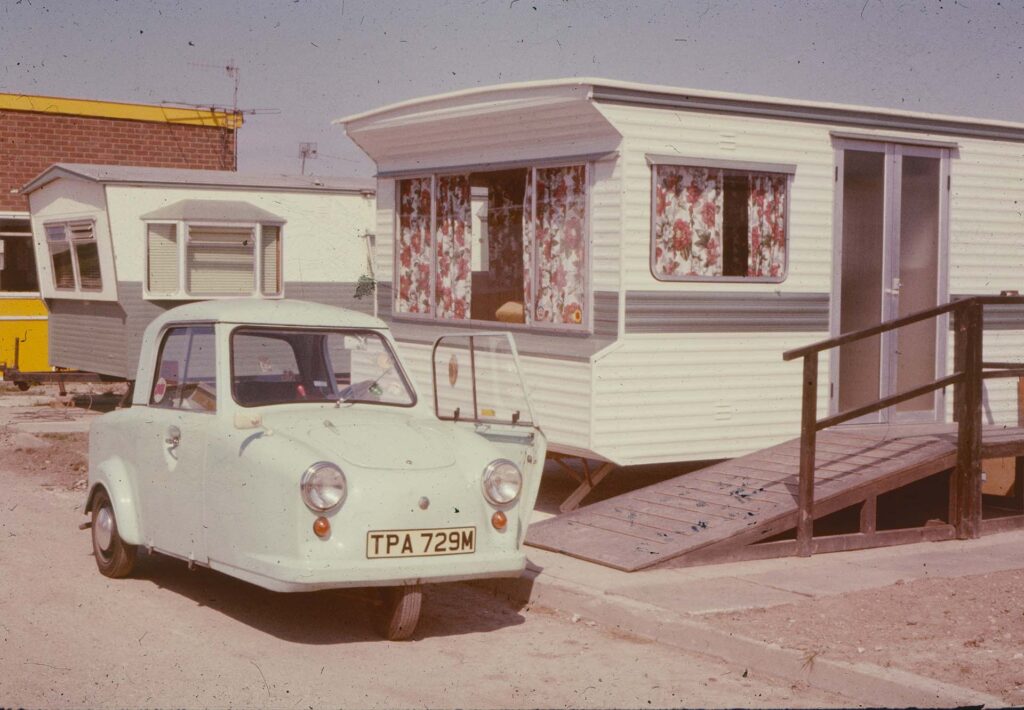
The Reliant Robin might be the only vehicle that’s famous for falling over. This odd little British three-wheeler was supposed to be a budget-friendly ride for drivers who didn’t need a full-sized ride. Plus, with only three wheels, it could be driven on a motorcycle license in the UK.
Unfortunately, physics had other ideas, and the Robin became infamous for its tendency to tip over during turns. Despite, or maybe because of its toppling antics, it gained a cult following and even starred in some of the funniest ride moments on Top Gear.
Vehicles Inspired by Everyday Objects
Some designers take inspiration from nature, others from art. And then there are those who look at a toilet or a sneaker and think, “Yep, that should be a car.” These vehicles are less about horsepower and more about pure, unapologetic imagination. Love them or laugh at them, they prove one thing: there are no rules in the world of strange-looking new cars.
The Shoe Car: Sudha Cars Museum’s Footmobile
If Cinderella went to car shows instead of balls, she’d definitely ride in the Footmobile. Built by K. Sudhakar of the Sudha Cars Museum in India, this giant shoe on wheels is exactly what it sounds like. It’s a massive, drivable sneaker. It’s complete with shoelaces, a sole, and all the quirky charm you’d expect from a vehicle inspired by footwear. It might not win any races, but it does win the award for “most likely to leave tire tracks on a fashion runway.”
The Purpose Behind the Peculiarity
Okay, so not every ride shaped like a shoe or spaceship was built just for laughs. Believe it or not, there’s often a method to the madness. Whether they’re paving the way for the next big innovation, sending a message, or simply grabbing the spotlight, these strange cars usually have a purpose that goes beyond just being weird for weird’s sake.
Innovation Through Experimentation
Strange cars are often like rolling science labs–testing ideas that are too wild (or expensive) for mainstream production, but too interesting to ignore. Think about the BMW GINA with its flexible skin or the six-wheeled Covini C6W.
These weren’t just design dares, they were serious tech experiments. Some automakers use these unusual builds to explore materials, aerodynamics, propulsion systems, and even ergonomics. Sure, some ideas flop harder than a Reliant Robin on a roundabout, but others go on to influence the future of design in unexpected ways.
Cultural and Artistic Expression
Not all strange cars are chasing engineering breakthroughs–some are just pure art on wheels. From the handcrafted eccentricities of Sudha Cars Museum to futuristic one-offs from major brands, many of these vehicles are creative expressions of a culture, a concept, or just one artist’s delightfully odd imagination. They reflect societal trends, challenge design norms, or simply aim to make people smile. After all, who says cars can’t be fun and philosophical?
Marketing and Publicity Stunts
Sometimes a weird car is just good marketing. A giant hot dog on wheels? Hello, Oscar Mayer. A gold-plated Lamborghini parked in front of a luxury hotel? Instant Instagram bait. Brands have long used strange vehicles as attention magnets–rolling billboards that spark curiosity, conversation, and headlines. Whether it’s for a product launch or a social cause if it’s strange enough to make you stare, mission accomplished.
Strange Cars–Embracing the Eccentric
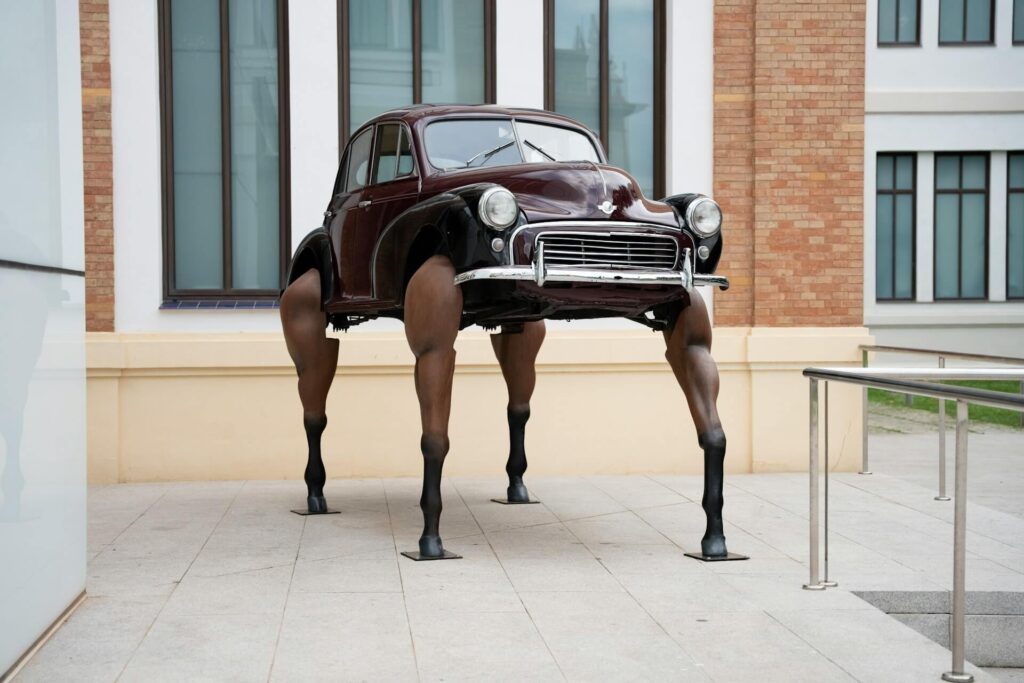
Strange-looking cars might not always make it to dealership floors, but they play a huge role in shaping the future of automotive design. They challenge what’s possible, spark conversation, and often lay the groundwork for innovations we eventually take for granted. Whether built for art, experimentation, or sheer publicity, these oddballs prove that creativity has no limits on four wheels. Embracing the eccentric means celebrating the wild, the weird, and the wonderfully unexpected–because without them, driving would be a lot more boring.