Most drivers check their engine oil, but few ever pull the transmission dipstick. Our transmission fluid color chart shows you exactly what to look for, because its color tells you a lot about the health of one of your car’s most expensive parts. In seconds, you’ll know whether the fluid is fine or it’s time to call a shop. A quick look takes less than five minutes. Catching dark or contaminated fluid early can mean the difference between a routine fluid service and a full rebuild, one of the costliest repairs a car can need.
What Does Transmission Fluid Do?
In an automatic, transmission fluid is doing several jobs at once. It lubricates the gears and bearings, carries heat away, and creates the hydraulic pressure that applies the clutches and lets the car shift. Manual gearboxes use their own gear oil, which is one of the many differences covered in our manual vs. automatic comparison.
Here’s a detail most people don’t know: automatic transmission fluid (ATF) isn’t naturally red. Manufacturers add red dye so the fluid is easy to identify and so leaks are easy to spot under the car. Without the dye, it would look much like motor oil. That dye also makes color a reliable health check, because as the fluid ages and breaks down, the red fades and darkens in a predictable way.
Transmission Fluid Color Chart at a Glance
Use this chart as a quick reference when you pull the dipstick. Color is the first clue, but smell and texture matter too, so read the notes under the table before deciding what to do.
| Color | What it means | What to do |
|---|---|---|
| Bright, clear red | New or healthy fluid | Nothing; keep checking regularly |
| Light brown or reddish brown | Normal aging, fluid is wearing out | Plan a fluid change soon |
| Dark brown | Old, oxidized fluid | Change the fluid and check for shifting issues |
| Black with a burnt smell | Overheated fluid, possible internal wear | See a transmission specialist |
| Milky pink or foamy | Coolant or water contamination | Stop driving and have it inspected |
Bright Red is Healthy Fluid
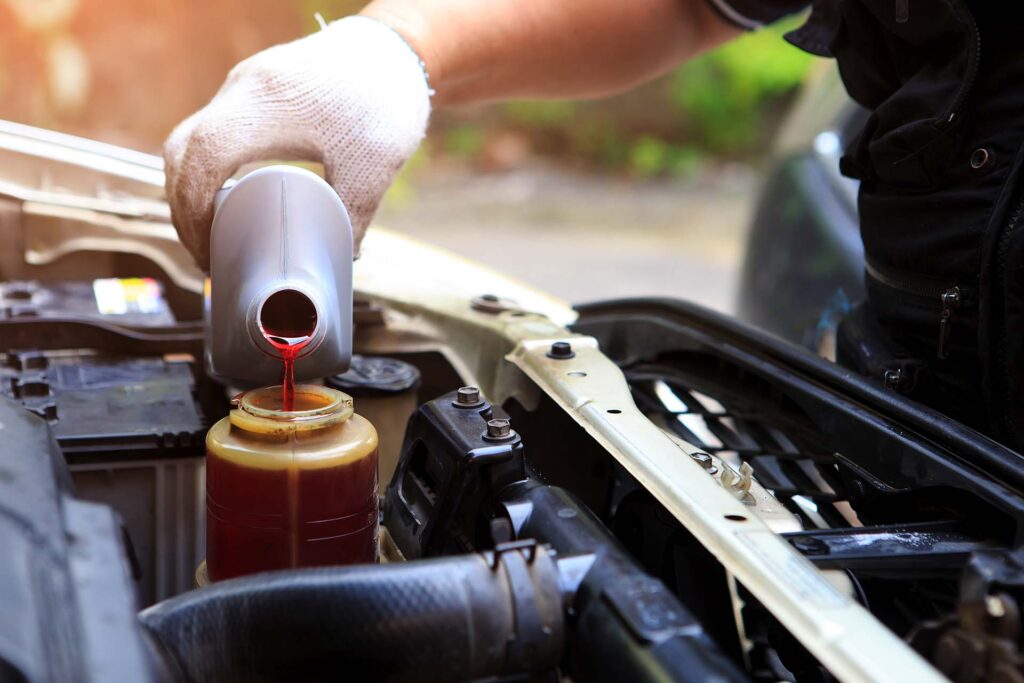
Fresh ATF is bright and see-through, a bit like cherry cough syrup. If yours looks like this and the level is in the safe range on the dipstick, your transmission is in good shape. A few transmissions use fluid without the red dye, so check your owner’s manual if your new fluid looks amber or green.
Light to Dark Brown is Old Fluid
As ATF ages, heat breaks down its additives and the red slowly turns reddish brown, then dark brown. Light brown fluid usually just means it’s due for a change. Dark brown fluid has lost much of its protection, so don’t put the service off, especially if you tow or drive in heavy traffic.
Black With a Burnt Smell is Overheated Fluid
Fluid that has been overheated turns very dark brown or black. A burnt-toast smell is the real warning sign, because it means the fluid has cooked and the clutches may already be wearing. Heat is the number one enemy here, and our guide on how extreme heat affects your car explains why hot summers are so hard on transmissions.
Milky Pink is Coolant Contamination
Pink, milky, or frothy fluid, often called a “strawberry milkshake,” usually means engine coolant has leaked into the transmission. On many cars, the transmission cooler sits inside the radiator, and a failure there lets the two fluids mix. Coolant attacks the clutch materials quickly, so don’t keep driving. If you’re not sure which fluid is which, our explainer on antifreeze vs coolant helps.
How to Check Your Transmission Fluid Color
Checking ATF is similar to checking your engine oil, with one key difference: on most cars, the engine should be running and warm. Always follow the steps in your owner’s manual, since a few models want the car in neutral instead of park.
- Warm up the car. Drive for 10 to 15 minutes so the fluid reaches normal temperature, then park on level ground.
- Leave the engine running. Set the parking brake and keep the transmission in park unless your manual says otherwise.
- Find the dipstick. It’s usually toward the back of the engine bay, often with a red or yellow handle, and it’s separate from the oil dipstick.
- Wipe, reinsert, and pull it again. Then dab the fluid on a white paper towel. The towel shows the true color far better than the metal dipstick does.
- Check the level, smell, and feel. The fluid should sit between the marks, smell slightly sweet or oily, and feel smooth rather than gritty.
Many newer cars have sealed transmissions with no dipstick at all. On those, a shop has to check the level through a fill plug. While you’re under the hood, it’s a good time to also check your coolant level, since a low or contaminated cooling system can affect the transmission too.
Warning Signs That Go Beyond Color
Sometimes the fluid looks fine but the transmission is still telling you something. Pay attention to how the car drives, especially if you notice any of these:
- Slipping, where the engine revs but the car doesn’t speed up
- Delayed or harsh shifts, especially from park into drive
- Grinding, whining, or clunking noises when shifting
- Shuddering or vibration at certain speeds, which can overlap with the causes in our guide on car shaking while driving
- Bright red spots under the car after it’s been parked

What to Do When Your Fluid Looks Bad
Your next step depends on what the chart shows. Brown fluid usually calls for a service, while black or milky fluid calls for a diagnosis first, because changing the fluid won’t fix a cooler leak or worn clutches.
How Often to Change Transmission Fluid
There’s no single answer. Some modern fluids can last up to 100,000 miles, while other manufacturers call for a change much sooner, and towing or stop-and-go driving shortens the interval. Your owner’s manual is the final word, and brand guides like our Toyota maintenance schedule and Honda maintenance schedule show where the service usually falls.
If you do the drain yourself, never pour old ATF down a drain or into the trash. The EPA treats used transmission fluid like used motor oil, and its guide to managing and recycling used oil explains how to find a local collection site. For anything beyond a simple drain and fill, it pays to find a good mechanic who specializes in transmissions.
Let the Color Guide Your Next Move
A five-minute dipstick check is one of the cheapest ways to protect your transmission. Bright red means you’re fine, brown means plan a service, and black or milky pink means get help now. Make it part of your routine, and you’ll catch problems early instead of ending up with one of the most expensive car repairs out there.
Frequently Asked Questions About Transmission Fluid Color
Is It Normal for Transmission Fluid to Get Darker?
Yes. All ATF darkens slowly with heat and mileage, so a reddish-brown tint on a car that’s due for service isn’t a cause for panic. What isn’t normal is fluid that turns dark quickly after a change or smells burnt.
Can I Just Top Off Dark Fluid Instead of Changing It?
Topping off fixes a low level, not worn-out fluid. Adding fresh ATF to dark fluid only dilutes the problem, so plan a proper change, and use only the fluid type listed in your owner’s manual.
What Color Is Transmission Fluid When It Leaks?
Usually red or reddish-brown, and the spots tend to appear under the front or middle of the car. Coolant leaks are often green, orange, or pink and smell sweet, while brake fluid is clear to light yellow, so color and location help you tell them apart.