Over the years, automakers have pushed the limits of dashboard design, creating some truly iconic clusters. Some are pure function, some are high-tech wonders, and a few look like they belong in a spaceship. But what is the best gauge cluster on a car ever? Let’s take a ride through history and check out the most legendary dashboards of all time.
The Best Gauge Cluster Does More Than Just Telling You You’re Speeding
A gauge cluster is like a car’s personality packed into a dashboard. It’s more than just a speedometer and fuel gauge. It’s a driver’s command center. Some are simple and classic, giving off vintage classic car vibes, while others look like they were ripped straight from a fighter jet. Either way, they’ve got plenty of jobs to do:
- Instant information – with a quick glance you can see everything from speed to engine health,
- Driver experience – the best clusters make a four-wheeler feel sportier, smarter, or just more fun,
- Safety first – heads-up displays and warning lights help drivers react faster on the road,
- Tech upgrades – modern clusters come packed with navigation, entertainment, and even AI assistants,
- Style points – some dashboards are so cool they deserve their own museum exhibit.
The Best Car Gauges Turn Driving Into a Whole Experience
A four-wheeler can have the most powerful engine, the smoothest ride, and the fanciest interior, but if the gauge cluster is boring, it feels like something’s missing. A well-designed dashboard makes driving feel special. Whether it’s a classic row of analog dials or a futuristic digital screen that reacts to every gear shift, the best gauges for a car add to the thrill of being behind the wheel.
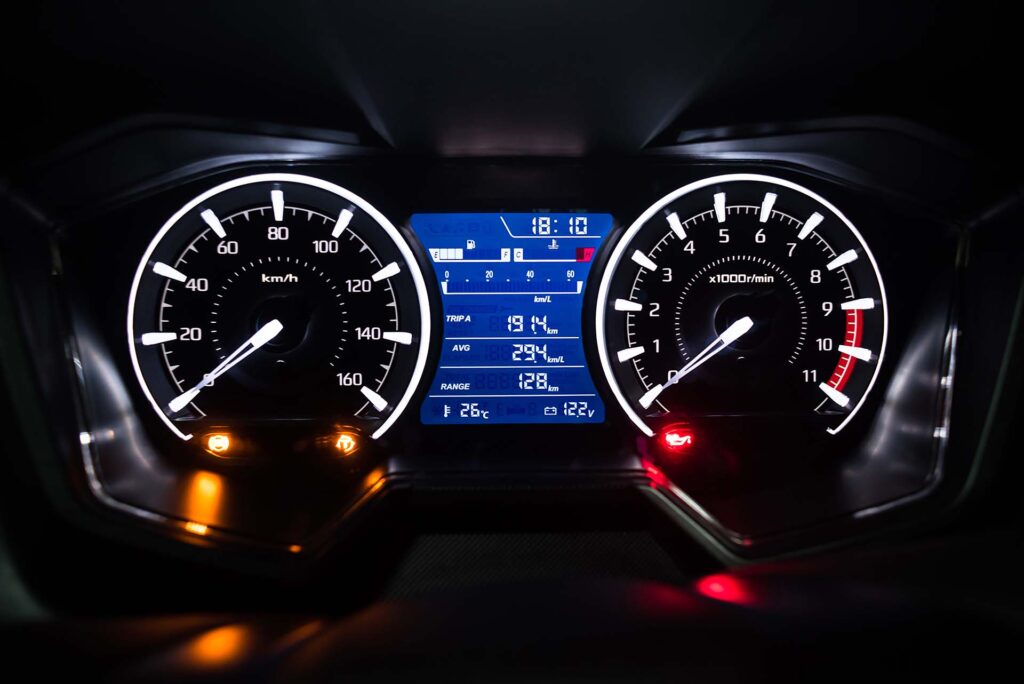
How Did Dashboards Evolve From Spinning Needles to Touchscreens?
Early cars didn’t even have dashboards – drivers just felt their speed and hoped nothing was overheating. While the first fuel gauge appeared on a 1914 Studebaker, this innovative feature really rose to prominence in the 1920s, featuring simple dials for speed and fuel levels. For a few decades there, no significant changes were made but then came the ’80s, when digital displays came into the picture.
One of the coolest shifts in this aspect of vehicle evolution happened in the 2000s when luxury brands started blending analog with digital. Fast forward to today, and we have fully customizable OLED screens, heads-up displays, and even clusters that can show real-time traffic, weather, and a live feed of what’s behind you.
But here’s the real question, how much tech is too much? At what point does a dashboard stop being helpful and start being a distraction? Well, let’s take a ride through some of the most iconic designs throughout the past few decades, and maybe we’ll be closer to answering this question.
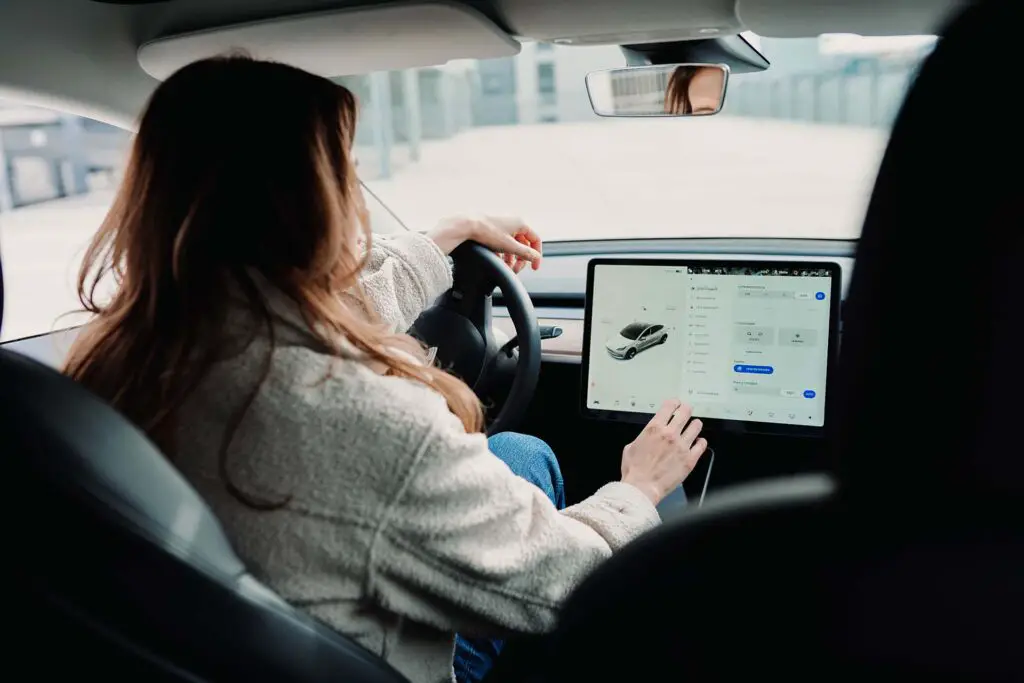
1963 Chevrolet Corvette Sting Ray is The King of Classic Dials
The 1963 Corvette Sting Ray had a dashboard that looked like it belonged in a jet fighter. With a perfectly symmetrical layout, a row of deep-set round gauges, and a tachometer that took center stage, it made every driver feel like a Formula 1 driver.
The needle movements were smooth, the visibility was crisp, and the chrome-trimmed bezels added a touch of elegance. Unlike modern screens, this dashboard had a soul, mechanical, analog, and built to last. The speedometer even had a unique ribbon-style readout, which was a bold design move for the time.
1976 Lamborghini Countach Has The Wildest ‘70s Sci-Fi Dashboard
The Countach was wild from every angle including the dashboard. Lamborghini designers clearly didn’t believe in subtlety, and it showed. The cluster featured deeply recessed analog dials surrounded by aircraft-style switches, making it feel more like a spaceship than a four-wheeler.
Speed, RPM, oil pressure, and even a voltmeter were packed into a tightly grouped panel that required some serious focus. Unlike today’s ergonomic dashboards, the Countach wasn’t exactly driver-friendly. Some gauges were awkwardly placed, and the switches looked like they were stolen from a nuclear control room. But that was part of its charm. This was a four-wheeler meant for drivers who loved the chaos of raw performance.

1981 DeLorean DMC-12 Has A Time Machine’s Dashboard
The DeLorean DMC-12 had one of the coolest digital gauge clusters of the early ‘80s, even before it became famous for time travel in Back to the Future. Instead of traditional dials, it featured a boxy, LED-lit speedometer and tachometer that looked straight out of an arcade game.
The square-shaped numbers glowed in an unmistakable ’80s style, making it feel futuristic for its time. But here’s the kicker, it only went up to 85 mph, thanks to US regulations at the time. So, technically, in the movie, hitting 88 mph was impossible unless Doc Brown installed some aftermarket magic.
1989 Mazda MX-5 Miata is Simple, Clean, and Driver-Focused
The first-generation Miata’s dashboard was a masterclass in simplicity. No gimmicks, no flashy lights just five crisp, round dials that gave drivers exactly what they needed. The tachometer sat front and center, reinforcing that this four-wheeler was all about the driving experience. The cluster had a retro-inspired look, echoing classic British roadsters, but with the reliability of a Japanese sports car.
It was bright, easy to read, and perfectly placed for quick glances while carving through corners. Miata fans will argue that newer models have fancier screens, but nothing beats the clean, analog perfection of the original. It’s proof that sometimes, less is more.
1992 Lexus SC400 Has The Smoothest Digital Cluster of the ‘90s
Lexus made a bold move in the early ‘90s by introducing a cluster that felt like something out of a luxury spaceship. The SC400 ditched traditional dials in favor of a silky-smooth digital speedometer and tachometer.
Unlike the blocky, pixelated attempts of the ‘80s, this display was crisp, modern, and incredibly cool to watch in motion. The numbers seemed to glide effortlessly, and the futuristic glow gave the SC400 an edge over its competition. It wasn’t just for show either the digital display adjusted its brightness based on ambient light, making it easy to read day or night. This was one of the first signs that Lexus was about to dominate the luxury market.
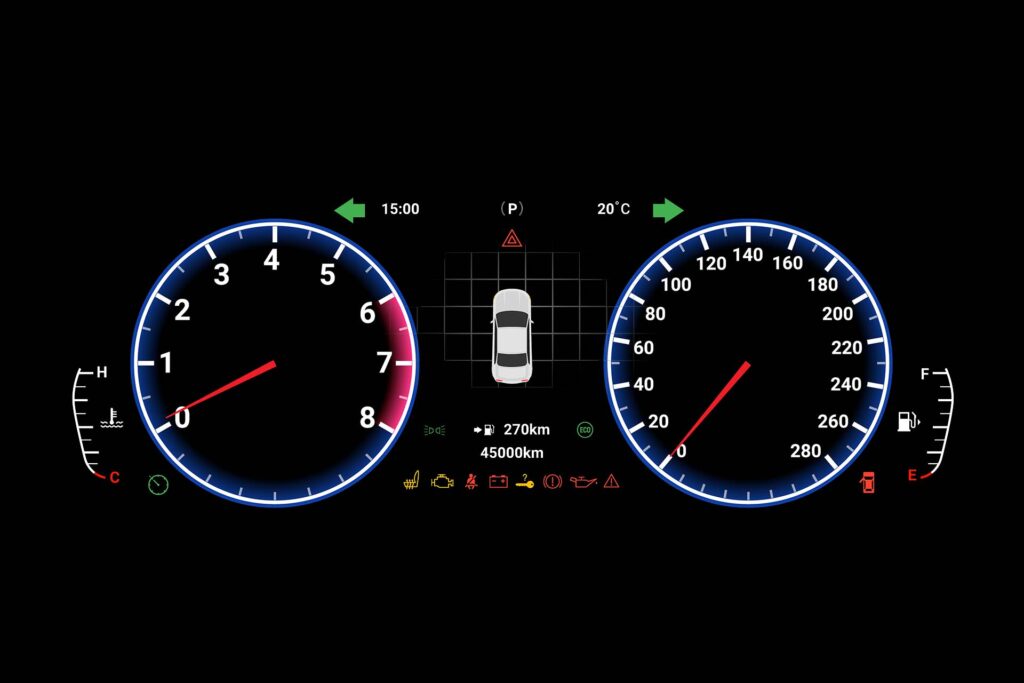
2005 Ford GT is The Modern Retro Masterpiece
The 2005 Ford GT took inspiration from the legendary GT40, and its gauge cluster was no exception. A massive central tachometer dominated the dashboard, a clear nod to its racing heritage. Flanking it were six auxiliary gauges with white faces and black markings, giving it that classic motorsport feel.
Unlike modern supercars overloaded with digital screens, the GT kept things mechanical and raw just like a proper driver’s four-wheeler should. The layout wasn’t just for looks, either it was designed for function. Every gauge was placed in a way that made it easy to check at high speeds. This was a ride built for pure performance, and the dashboard reflected that beautifully.
2014 Porsche 918 Spyder Blends Digital and Analog in Perfect Harmony
Porsche struck the perfect balance between classic and modern with the 918 Spyder’s gauge cluster. It featured a large, analogue tachometer in the centre, staying true to the brand’s racing DNA, but surrounded it with two high-resolution digital screens. These displays could be customized to show everything from navigation to hybrid power distribution.
The result was a design that gave drivers everything they needed without looking cluttered. It was also one of the first to feature performance telemetry, allowing drivers to track their lap times and even see G-force data. In a world shifting toward fully digital dashboards, Porsche proved that analog still had its place.
2018 Lamborghini Huracán is A Full Digital Feast
By 2018, Lamborghini had fully embraced the digital revolution, and the Huracán’s gauge cluster was a masterpiece. A massive, fully digital display replaced all traditional dials, offering an immersive, high-tech experience.
Speed, RPM, navigation, and even a G-force meter could all be customized with vibrant animations. The coolest part? The display would change layouts depending on the driving mode, flashing bright red graphics in Corsa mode when it was time to go full throttle. It made every drive feel dramatic, like piloting a futuristic race vehicle.
2021 Mercedes-Benz S-Class Brings the Future Inside the Cabin
Mercedes redefined luxury with the 2021 S-Class, and its dashboard was straight out of a sci-fi movie. The massive digital display featured 3D graphics, augmented reality, and a fully customizable interface.
One of the wildest features? It could track eye movement, adjusting the display based on where the driver was looking. The head-up display even projected navigation arrows onto the windshield, making it feel like a video game. It was the perfect example of how modern cars are blending luxury, technology, and convenience.
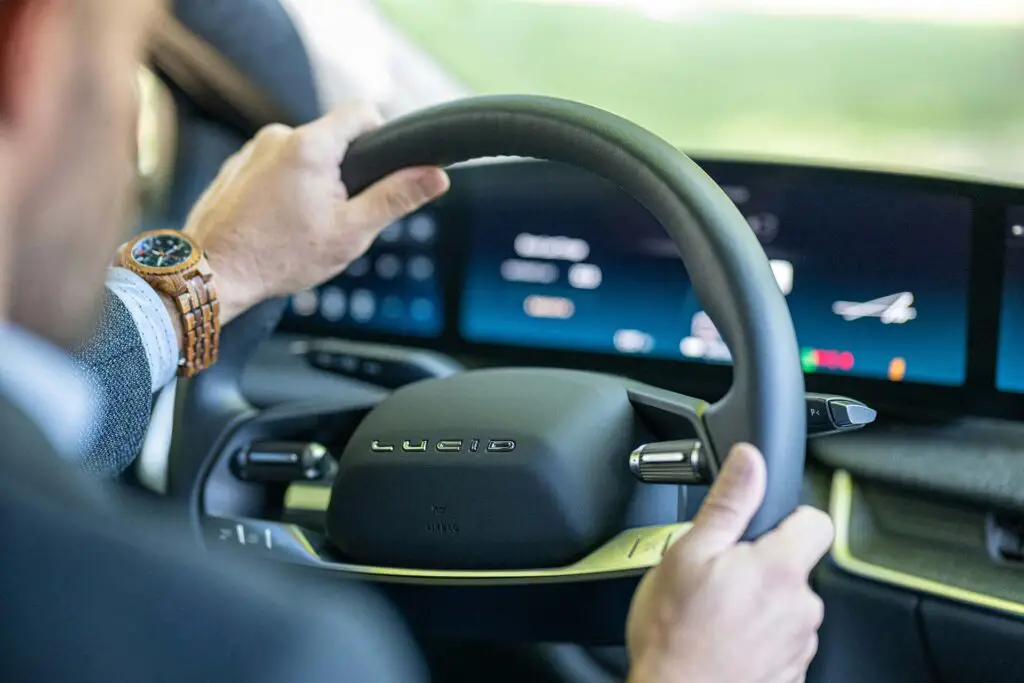
2022 Lucid Air Owns The Sleekest EV Gauge Cluster Yet
Lucid took minimalism to the next level with the Air’s ultra-wide digital dashboard. Unlike traditional layouts, this EV featured a 34-inch curved glass display that seamlessly blended into the dashboard.
The screen was divided into three sections speed and driving data in the center, vehicle settings on the left, and infotainment on the right. With instant response times, beautiful graphics, and effortless integration with the car’s AI, the Lucid Air set a new standard for electric vehicle interiors. It was the future of dashboards, and it looked stunning.
Staring at a Cool Dashboard Is Half the Fun
A great gauge cluster isn’t just about numbers and warning lights, it’s about making every drive feel special. From the timeless elegance of classic dials to the high-tech wizardry of modern digital displays, the best dashboards turn the act of checking your speed into an experience. So, next time you’re behind the wheel, take a moment to appreciate that glowing masterpiece in front of you… just don’t stare too long. Eyes on the road!